
Reckoning with reality
Grievance is easier than grief.


For this article, I set out to write a critique of Harvard’s widely celebrated defiance of the Trump administration’s threats to revoke federal funding.
I wanted to examine how institutions, even when they appear to act courageously, often do so reluctantly — and for reasons more complicated than principle alone.
I don’t think it’s a stretch to say that some of the things happening in higher ed right now aren’t great! But I became aware that my critique stemmed less from the situation itself than from my own clinical experience and my observation of the institutions I’ve belonged to (Harvard included, though only briefly).
That was the beginning of the problem. I didn’t have enough information about what was happening on the inside to render the kind of judgment I felt emotionally compelled to make. I was projecting into the unknown.
Which left me to ask: what was the emotion behind the impulse to write this article?
What I found was helplessness, disappointment, and anger. And I realized the deeper issue had little to do with Harvard. It was more personal, and perhaps harder to discuss: how easily grief and disappointment can harden into grievance, and how dangerous that transformation can be.
Most people (me included) will do almost anything to avoid acknowledging their failures and committing to change.
This isn’t pathological; it’s human. One of my earliest supervisors, Bob Mendelsohn, called it “referral by earlobe” — how people often come to therapy not because they want to, but because those around them can no longer tolerate the consequences of their avoidance.
A common form of avoidance is locating external causes for problems that are, at their core, internal. This is rarely clear-cut: most entrenched struggles arise from a collision of internal vulnerabilities and external pressures. But a particularly pernicious form of avoidance is the identification of enemies, those onto whom we can project blame for the unfinished work we can’t yet bear to face.
Identifying enemies serves multiple functions. It creates a sense of moral clarity, shielding us from the painful awareness of our own responsibility. It organizes fear and disappointment into a story where someone else is always at fault. And it builds a ready-made community of aggrieved peers, allowing private anguish to be expressed publicly and angrily without ever having to look in the mirror.
But what happens when warring parties — including the supposed “adults” in the room — fall into this projective trap and repeatedly deny their own role in creating the mess we’re all in?
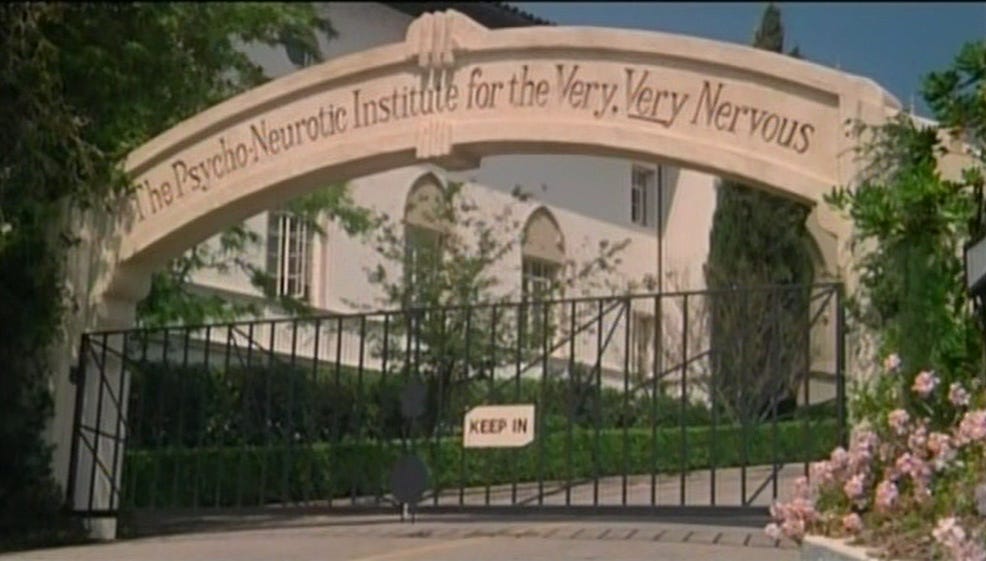
In my clinical work with emerging adults, I see up close how shame arises not from laziness or entitlement, but from the awful realization that the systems meant to prepare them — family, education, civic institutions — have left them unequipped to manage the realities they now face.
The result isn't only disappointment. It’s isolation, internal fragmentation, rage, and more. When institutions fail to hold people during the most vulnerable stages of growth, the pain gets internalized into shame, which can harden into grievance.
Grievance toward systems that feel built for “them,” not “us.” Systems that resemble walled cities more than open doors. Systems that mistake pity and judgment for understanding.
And grievance seeks justification, not repair.
This dynamic isn’t new, but it feels like it’s accelerating. We live in a time when institutions — universities, governments, public discourse itself — have become projection screens for vast, often incoherent frustrations seeking any solution at all, from pre-dawn cold plunges to the complete overhaul of democracy.
Institutions are being blamed not only for their real failures, but for the emotional debris of a culture that promised freedom without preparing us for its challenges.
Criticizing institutions without acknowledging our grief can only deepen the wound. Doing so risks turning legitimate sorrow into another outlet for anger and the illusion that something outside of us is always to blame.
That’s not how things get better.
When I first sat down to write about Harvard, I thought I was being careful.
I thought I was trying to hold an institution that had disappointed me accountable for its failures. I thought that was more productive than adding one more voice to the vast anti-authoritarian chorus.
And maybe it is. Maybe there’s still value in holding our own team to higher standards than the bad guys.
But when I stepped back and reflected on what was happening inside me, I felt less like a mature adult and more like a kid who just wants his parents to stop fighting. For the love of God.
My problem was that I was desperately hoping a broken system could miraculously become whole again, and make me feel whole again, too.
The question isn’t whether institutions will fail us. They already have, and they will again. The question is whether we’re willing to face what remains and carry the work forward, even when there’s no reassurance to be found.
Which means we have to feel our feelings.
There’s no shortage of outrage today. What’s in short supply is reckoning — especially with ourselves, and with the world as it actually is.
Seth Pitman, PhD, ABPP is a board-certified psychologist, psychoanalyst, and consultant who provides confidential advisory services to leaders making high-stakes decisions. To learn more and book an initial session, email me at seth@sethpitman.com or visit my website: sethpitman.com.